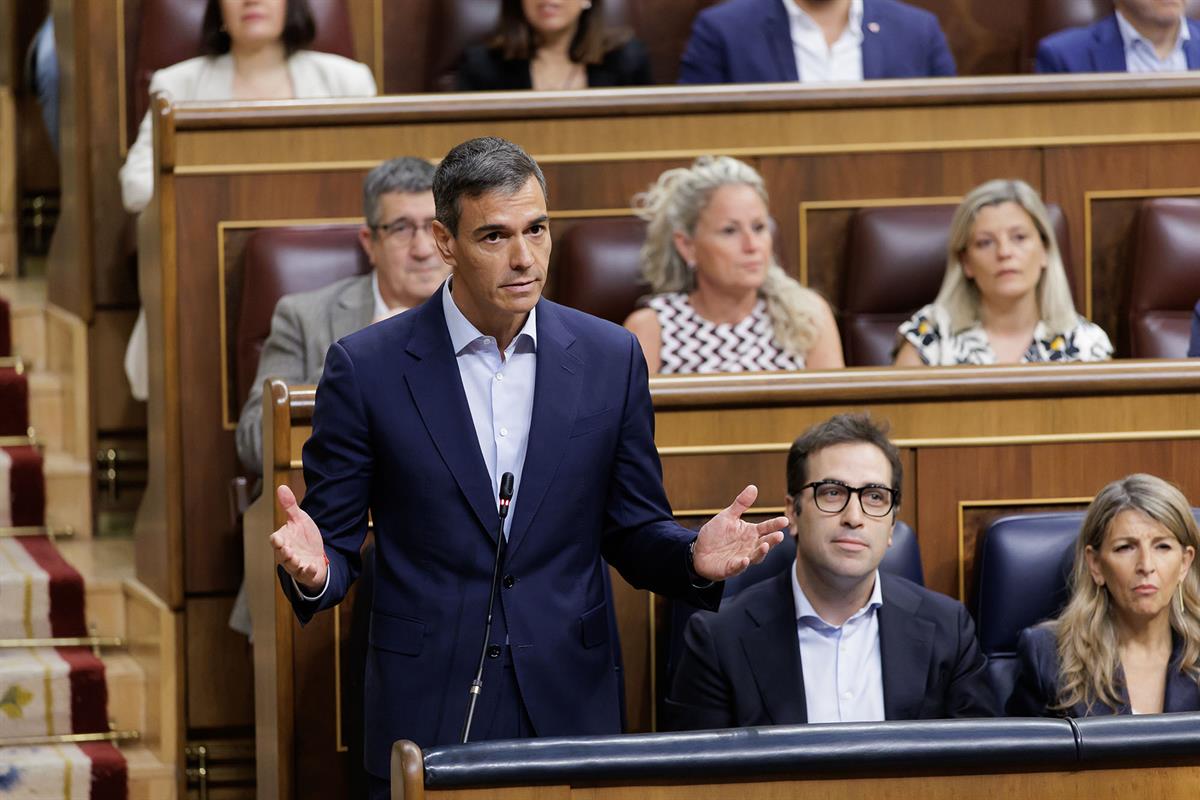

Spain’s prime minister Pedro Sánchez faced a hostile Congress on Wednesday as corruption cases involving his party, family and former allies turned into a direct challenge to his grip on power.
Sánchez used a 32-minute address to deny knowing about or tolerating improper conduct, while insisting his government would respect court decisions. “I never knew of, nor would I have tolerated, any of these practices,” he told lawmakers.
The Socialist leader said public debate in Spain had been “flooded with judicial news” and accused political opponents of trying to merge separate cases into a single narrative against him. He addressed cases involving the PSOE, his wife Begoña Gómez and his brother David Sánchez.
“There must be no impunity for corrupt individuals, whoever they may be,” Sánchez said, adding that his party had not been illegally financed. He said others had exploited party resources and rejected the idea that corruption was built into political organisations.
The pressure grew after Supreme Court rulings this week involving José Luis Ábalos, Víctor de Aldama and Koldo García. Ábalos, a former Socialist minister and once a close Sánchez ally, has become a central figure in the political storm.
Opposition leader Alberto Núñez Feijóo told Sánchez he carried responsibility for the scandals surrounding his party and family. “You bear all the political responsibility,” he said, accusing the prime minister of sitting at the centre of what he called a corrupt political network.
Feijóo said his party would table a motion of no confidence if it had the numbers. For that to succeed, right-leaning nationalist parties including the Basque Nationalist Party and Junts would have to abandon Sánchez.
Sánchez showed no sign of stepping aside. “The question is not how long we are going to carry on,” he told MPs. “The question is: how could we not carry on?”