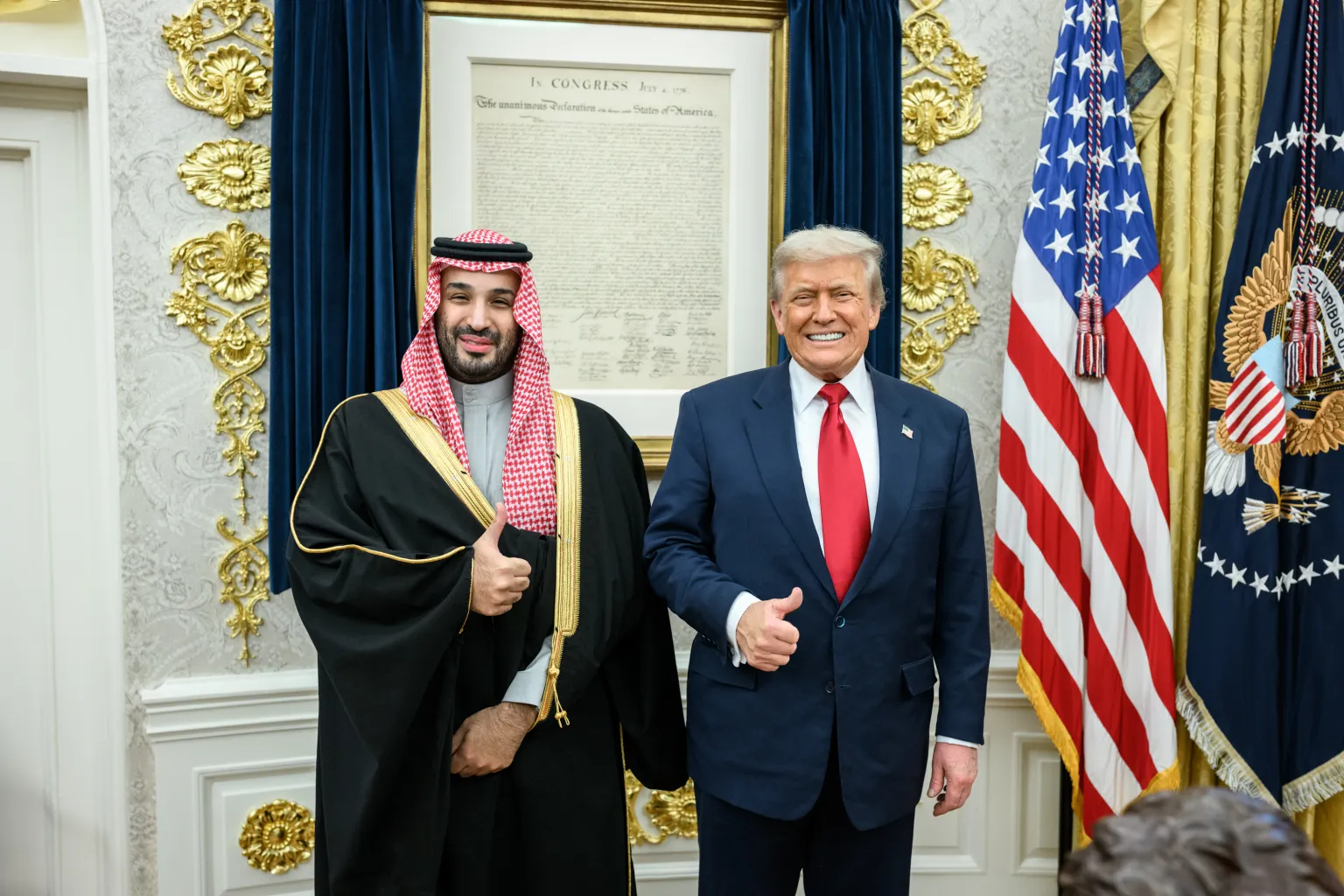
The United States and Saudi Arabia have signed a landmark agreement that could allow the Gulf kingdom to develop a civilian nuclear programme.
The U.S. Energy Department described the deal as a “peaceful nuclear co-operation agreement” that would give American companies major access to Saudi Arabia’s nuclear energy programme.
The full text of the agreement has not been made public. However, U.S. media have reported that it could allow Saudi Arabia to enrich uranium in the future. Uranium enrichment can be used to produce fuel for nuclear power plants, but it can also raise proliferation concerns because the same process can be linked to nuclear weapons development.
Experts cited in the report warned that such a step would be a first for the United States and could increase the risk of future nuclear proliferation in an already unstable region.
The U.S. Energy Department said a separate “bilateral safeguards agreement” was also signed alongside the nuclear co-operation deal. It said the two agreements create the legal basis for a decades-long, multi-billion-dollar partnership focused on economic and strategic priorities, including nuclear nonproliferation.
Saudi Arabia said the agreement extends existing energy co-operation between the two countries and follows the Saudi leader’s visit to Washington last November.
The deal comes as fighting between the United States and Iran intensifies. Saudi Arabia, a longtime U.S. ally, hosts several U.S. bases that have been targeted by Iranian attacks. It also comes days after Iran’s allies in Yemen, the Houthis, announced a “maritime blockade” against the kingdom.
Specific details of the nuclear arrangement remain unclear. Earlier media reports suggested that after a joint study with the United States, Saudi Arabia could be allowed to enrich uranium on its own soil to produce fuel at a U.S.-built enrichment facility, instead of relying on imported fuel.