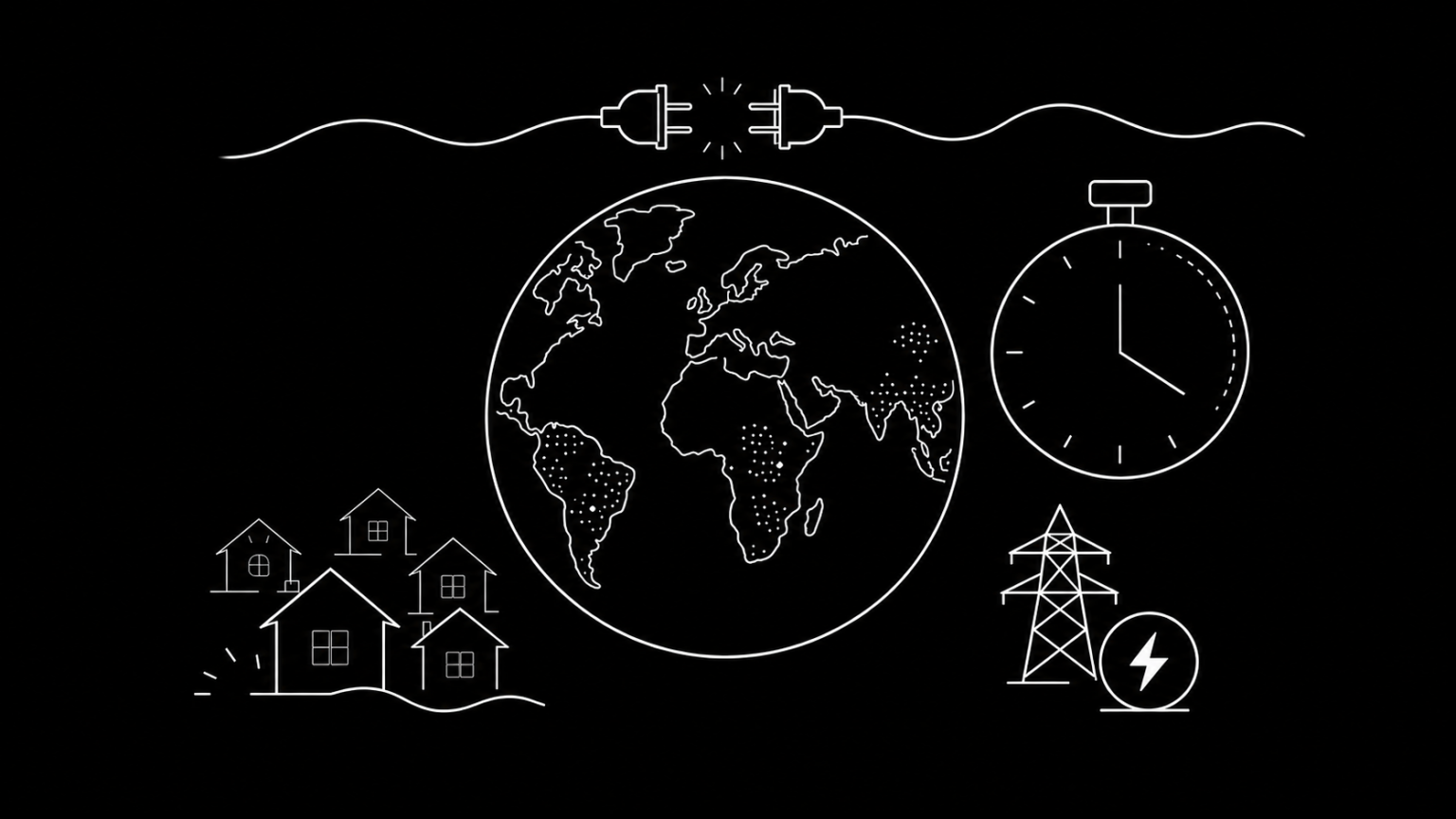

A joint report released Tuesday by the United Nations, the International Energy Agency, the World Bank and the World Health Organization found that 655 million people, representing 8 percent of the global population, still have no access to electricity, while two billion continue to rely on open fires and polluting fuels to cook their food, putting their health at serious risk.
The latest edition of Tracking SDG 7: The Energy Progress Report, which includes new data from 2023 and 2024, warns that the world is running out of time to meet Sustainable Development Goal 7, the international commitment to ensure universal access to affordable, reliable and clean energy by 2030.
Sub-Saharan Africa is where the crisis is most severe. More than 560 million people in the region live without electricity, and 970 million lack access to clean cooking. The annual pace of electrification in the region has slowed to roughly half the rate recorded in the previous decade, and the report says the speed of progress needs to triple just to reach the 2030 target.
The funding picture is heading in the wrong direction. International clean energy financing directed at the world’s least developed countries fell 11 percent in 2024 to $3.7 billion, even as overall flows to developing countries edged up slightly to $24.6 billion. Debt-based financing accounts for 80 percent of all clean energy support, with grants making up just 13 percent.
There is some progress worth noting. Renewables now account for more than 30 percent of global electricity consumption, and since 2010, 800 million people have gained access to electricity and 1.5 billion have gained access to clean cooking. But the rural electricity gap in Sub-Saharan Africa is actually widening: the number of people without power in rural areas grew from 376 million in 2010 to 447 million in 2024, as population growth outpaces grid expansion. The report will be formally presented to decision-makers on July 8 at the High-Level Political Forum on Sustainable Development in New York.