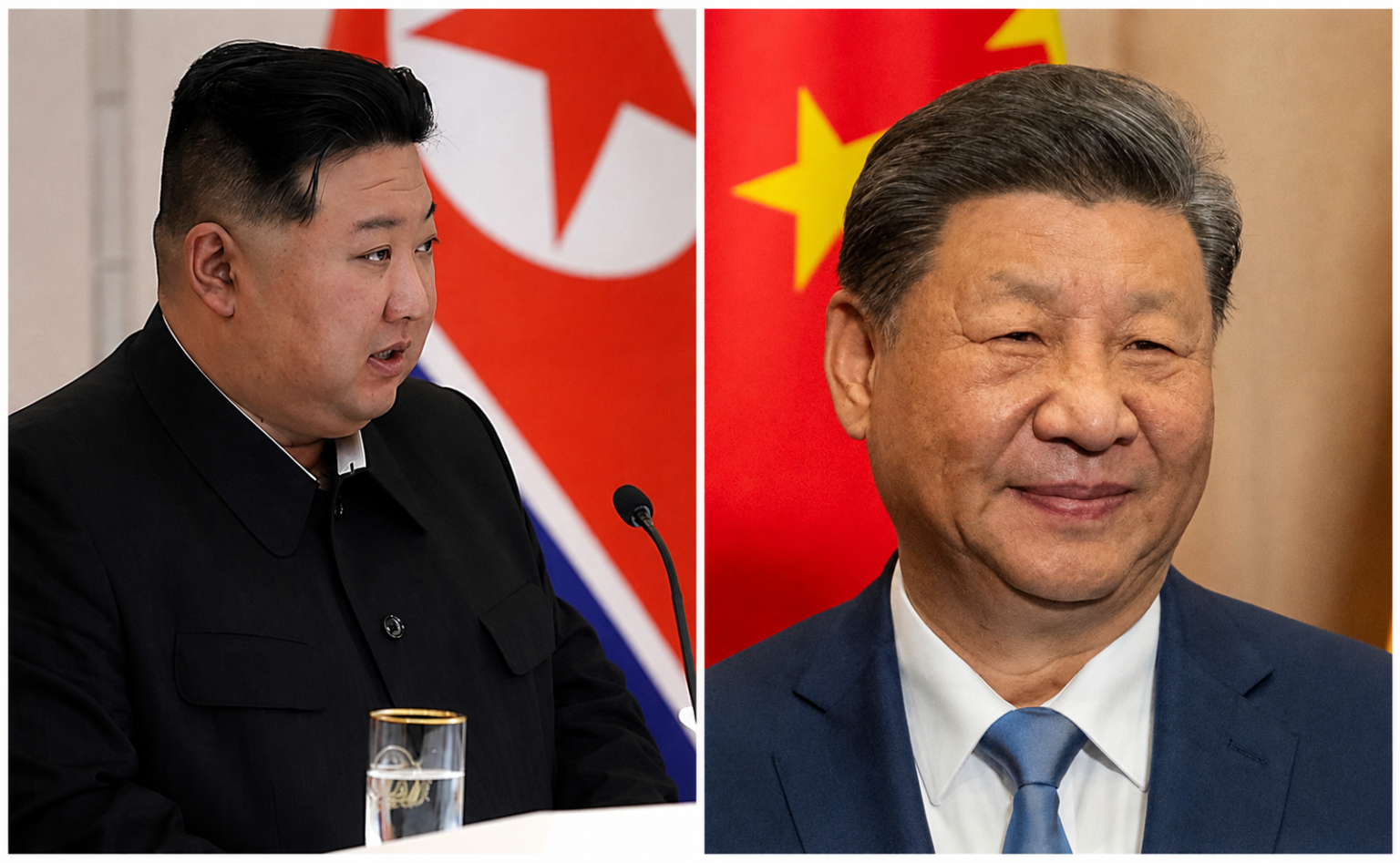
Chinese President Xi Jinping and North Korean leader Kim Jong Un pledged to deepen “strategic cooperation” and combat global “hegemony” during Xi’s rare state visit to Pyongyang – his first in nearly seven years.
While the official rhetoric targeted the United States, the true focus of the summit was countering Russia’s rapidly growing influence over North Korea. Following Pyongyang’s deployment of over 10,000 troops to assist Moscow in Ukraine and the signing of a mutual defence pact, Beijing is moving aggressively to reassert its role as North Korea’s primary patron. China, which still controls roughly 95% of North Korea’s trade, is using economic leverage to prevent Kim Jong Un from slipping entirely into Vladimir Putin’s sphere of influence.
The summit also directly challenged recent diplomatic claims from Washington. Less than a month after US President Donald Trump claimed that Beijing and Washington shared a common goal of “denuclearization,” Pyongyang officially dismissed those claims as false. Notably, the term “denuclearization” was entirely omitted from the Xi-Kim joint statements, signalling that China is willing to look past North Korea’s nuclear ambitions in exchange for strategic loyalty.
To cement this realignment, Xi offered Pyongyang an economic lifeline: fully reopening border crossings, restoring commercial flights, and supplying critical food and fertilizer shipments. Beijing’s ultimate challenge will be maintaining its tight grip on North Korea without provoking secondary sanctions that could damage China’s vital trade relations with the US and Europe.