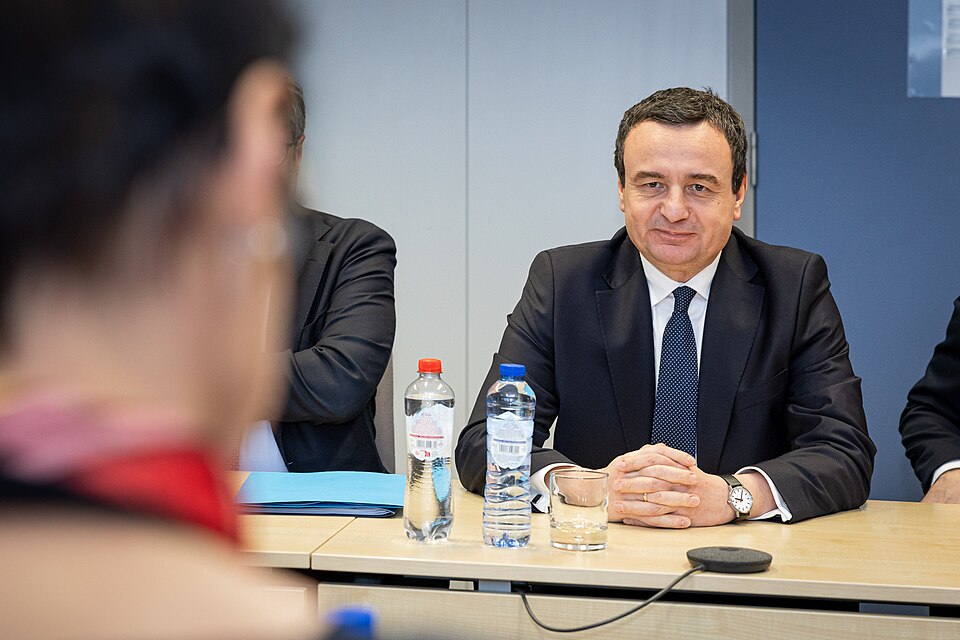
Kosovo’s Prime Minister Albin Kurti and his ruling Vetëvendosje (Self-Determination) party secured the most votes in Sunday’s snap parliamentary election but fell short of an absolute majority. This outcome leaves Europe’s youngest democracy trapped in a profound institutional deadlock, with no clear path toward forming a stable government.
The snap election Kosovo’s third in less than 18 months—was triggered after deeply polarized lawmakers repeatedly failed to reach a consensus on electing a new president to replace Vjosa Osmani. While Kurti’s left-wing nationalist movement dominated the polls with approximately 43% of the vote, this marks a noticeable drop from the 51% landslide majority the party enjoyed after the previous snap election in December 2025. Mainstream opposition parties, including the Democratic Party of Kosovo (PDK) and the Democratic League of Kosovo (LDK), made marginal gains by capitalizing on growing public discontent over Kurti’s unilateral governance style. Because Vetëvendosje cannot govern alone, the stage is now set for highly combative coalition negotiations, with opposition leaders already threatening to boycott Kurti unless he makes radical policy concessions.
The prolonged gridlock has taken a severe toll on the nation’s fragile economy and triggered immense voter fatigue. Turnout plummeted to roughly 36.8%, the lowest in Kosovo’s history since declaring independence from Serbia in 2008. Former political leaders have openly warned about the catastrophic long-term costs of this deadlock. Frustrated citizens expressed growing resentment that continuous political infighting has paralyzed state institutions, stalled vital economic reforms, and left infrastructure projects frozen. With inflation eroding household purchasing power and unemployment remaining stubbornly high, the persistent instability is forcing much of the country’s educated youth to emigrate to Western Europe in search of better opportunities.
Furthermore, the domestic paralysis has entirely frozen Kosovo’s progress on the international stage. Relations with both the European Union and NATO remain severely strained due to the lack of a reliable, unified negotiating partner in Pristina. Western diplomats have expressed deep concern that a prolonged government-formation process will delay the implementation of crucial security arrangements and Western-backed peace dialogue with Belgrade. As Kurti prepares to navigate a hostile parliament, Kosovo faces a dangerous period of uncertainty that risks further isolating the country from its vital Western allies.