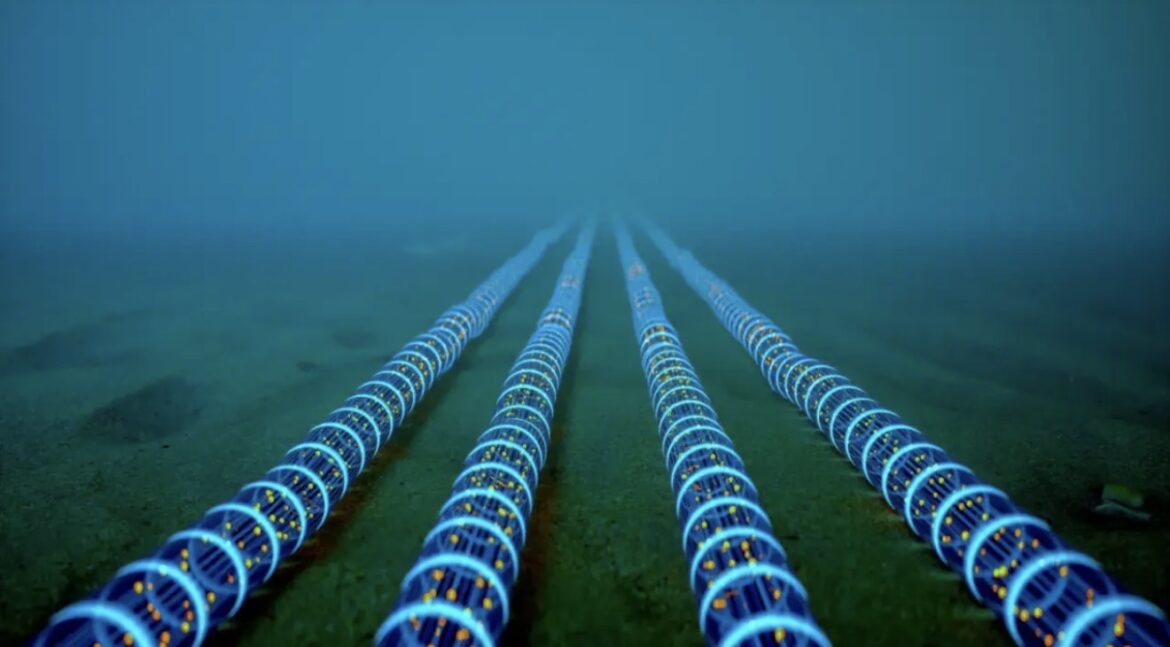
Finland is testing an advanced new system for protecting underwater internet infrastructure, which transforms existing internet cables into massive sensors capable of detecting suspicious activity on the seabed.
The technology is based on Distributed Acoustic Sensing (DAS), which allows optical cables to register even the smallest vibrations in their surroundings, effectively functioning as passive sonar systems.
The system was developed by Finnish telecommunications company Elisa, and its goal is to provide early detection of potential attempts to damage critical underwater infrastructure. In the event of an incident, the technology would alert the Coast Guard, the Navy, and cable operators in real time.
Undersea internet cables are considered the “backbone” of the global internet, as they carry around 99% of worldwide internet traffic as well as vast financial transactions. Despite their crucial role, they are difficult to monitor due to their extensive geographical spread.
An additional issue is that their routes are publicly available on maritime charts, making them a potential target for misuse. In recent years, experts have reported cases of deliberate dragging of anchors along the seabed, which can damage cables and disrupt communications.
Recently, several suspicious cases of damage to underwater infrastructure have been recorded in sensitive regions, including the Baltic Sea, the Red Sea, and areas around Taiwan.
At the same time, there have also been reports of increased presence of ships and submarines near transatlantic cables, further raising suspicions of possible seabed mapping for future operations.
The new technology works by using existing optical cables as sensors that “listen” to vibrations in the surrounding environment. This allows detection of movements, impacts, or other anomalies near the cables.
The system is relatively cost-effective because it is built on top of existing infrastructure. The only major investment involves installing signal analysis units approximately every 100 kilometers.
According to Jouni Petrou from Elisa, the system represents an important step in protecting critical infrastructure:
“Following recent cable disruptions, we have developed a solution that provides early warning of threats and helps prevent larger-scale damage,” he said.
Finland is not the only country investing in the protection of undersea cables. As part of global security initiatives, several technologies are being developed, including underwater drones and autonomous surveillance systems.
These include initiatives such as AUKUS (Australia, the United Kingdom, and the United States), as well as Pentagon projects aimed at developing low-cost autonomous submarines. At the same time, startups are developing AI-powered underwater drones capable of operating at great depths.
Although similar technological solutions already exist, the Finnish system stands out as a nationally coordinated project involving multiple institutions and scientific organizations, including Fingrid, Gasgrid Finland, and the University of Helsinki.
With the growing dependence on digital communication, protecting underwater infrastructure is becoming one of the key security challenges of modern digital society.