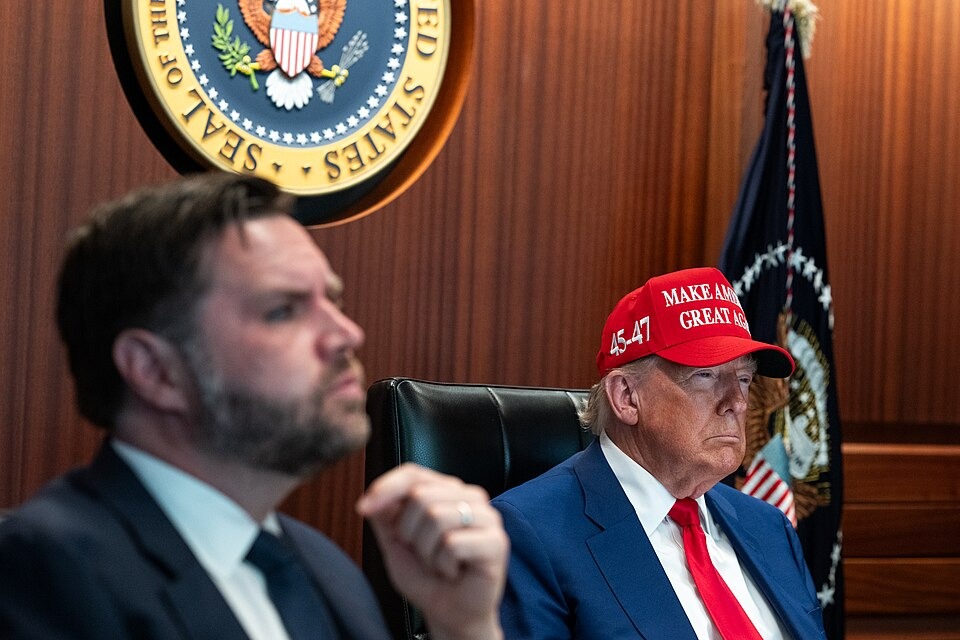

The setting could not have been more carefully chosen. A Swiss mountain resort overlooking Lake Lucerne, mediators from Pakistan and Qatar in the room, and for the first time since the 14-point memorandum was signed last week, American and Iranian negotiators sitting face to face. JD Vance told reporters he had come to Switzerland to “turn over a new page” and “transform our relationship with the people of Iran.”
Speaking to Fox News from Camp David, the president warned Iranian officials they “won’t even make it back” to their country if they don’t make a deal. The remarks landed in the middle of live negotiations. Iranian state media said the talks had entered a “difficult phase” and recessed after the “publication of an insulting message by the US President.” Iran’s chief negotiator Mohammad Bagher Ghalibaf did not stay quiet. “Don’t they think to themselves that if their threats had any effect, they wouldn’t have reached the point of despair today?” he posted on X. “We don’t count on the threats of the Americans.” He added that Iran’s armed forces were “prepared to respond in a different manner.”
The talks stalled. Back-channel efforts kicked in. Qatar and Pakistan worked the room. The Iranian delegation met separately with Qatari mediators before eventually returning. By the end of the day, Qatar and Pakistan issued a joint statement saying discussions had been conducted in a “positive and constructive atmosphere” with “encouraging progress” made.
The drama had actually started before Trump’s post. Iran’s Revolutionary Guard Corps announced Saturday it was re-closing the Strait of Hormuz, citing Israeli strikes in Lebanon that killed at least 20 people the previous day, hours after a ceasefire with Hezbollah had taken effect. US Central Command disputed the closure, saying traffic continued to flow and that millions of barrels of oil had moved through the strait in recent days.
Lebanon was the first item on the agenda when talks officially opened Sunday morning, an emergency addition reflecting just how close the whole exercise came to collapsing before it started. The talks had originally been scheduled for Friday but were postponed entirely after Iran cited the Lebanon violence as a reason to stay home. A Pakistani mediator flew to Tehran to persuade the Iranian delegation to reconsider.
Inside the room, the substance was serious. Discussions covered frozen assets, sanctions relief tied to Iran’s energy sector, enforcement of the Lebanon ceasefire and deconfliction mechanisms for both flashpoints. Iranian delegation member Hussein Gurbanzadeh told state television that a final draft proposal was ready. IAEA chief Rafael Grossi was also present in Switzerland, expected to lead technical discussions on Iran’s nuclear program and the oversight of uranium downblending required under the MoU.
The Iranians declined to stand beside the US, Pakistani and Qatari delegations in front of cameras. A small detail. But in a negotiation this fragile, small details tend to matter.