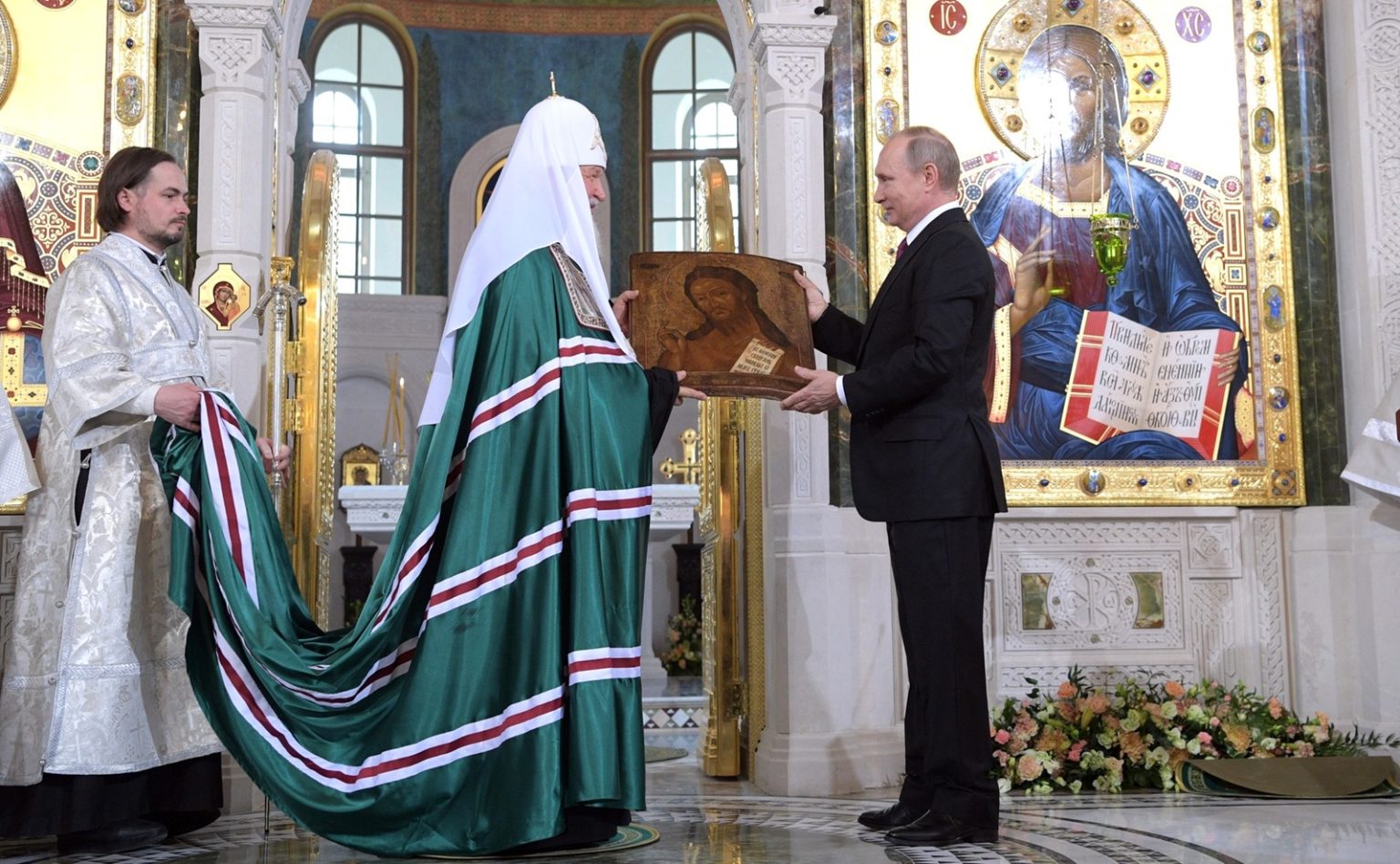
The European Union has removed Patriarch Kirill, the head of the Russian Orthodox Church, from a draft sanctions package after Bulgaria vetoed the proposal during closed-door negotiations, citing religious and cultural concerns.
Several diplomats confirmed to Euronews that Kirill’s name was taken out of the draft during an extraordinary meeting of EU ambassadors on Sunday. Bulgaria also opposed blacklisting Russian billionaire Vagit Alekperov, the founder of Lukoil, and his name was also removed from the proposal.
The wider sanctions package was not finalized at the meeting, but diplomats said progress had been made toward a possible agreement later this week.
Bulgaria’s opposition to sanctioning Kirill had been expected after Prime Minister Rumen Radev publicly rejected the idea last month. He argued that extending sanctions into the religious sphere would send the wrong message.
“What message are we sending when we extend sanctions and war into the sphere of religion? Do we realise where this leads?” Radev said.
Kirill has been accused of using his religious and political influence to support Moscow’s war in Ukraine. Under his leadership, the Russian Orthodox Church approved a document describing the invasion as a “Holy War” and calling for the destruction of Ukrainian independence.
The EU first tried to blacklist Kirill in 2022, but Hungary blocked the move at the time, arguing that it raised questions of religious freedom. The issue returned this year after Hungary’s new government signalled it was ready to change course, allowing EU officials to put Kirill’s name back into the draft package.
Bulgaria then emerged as the main obstacle. Radev said his concern was not Kirill as an individual, but his position as head of the Russian Orthodox Church, which shares Eastern Orthodox ties with Bulgaria’s own church.
“The era of the Crusades is over,” Radev said. “I am concerned about the millions of people who belong to that church.”
Sofia also pushed to spare Alekperov, arguing that sanctions against him could complicate Bulgaria’s dispute with Lukoil over the Neftohim Burgas refinery. Radev said targeting Alekperov would amount to “shooting ourselves in the foot” because Lukoil has launched a €3 billion compensation claim over the state takeover of the refinery.
Bulgaria appointed a special administrator to the refinery in November 2025 after U.S. sanctions on Lukoil forced the company to put its international operations up for sale. The refinery, the largest in the region, no longer uses Russian oil.
The latest dispute shows how individual member states can still reshape EU sanctions policy, since approval requires unanimity from all 27 governments.