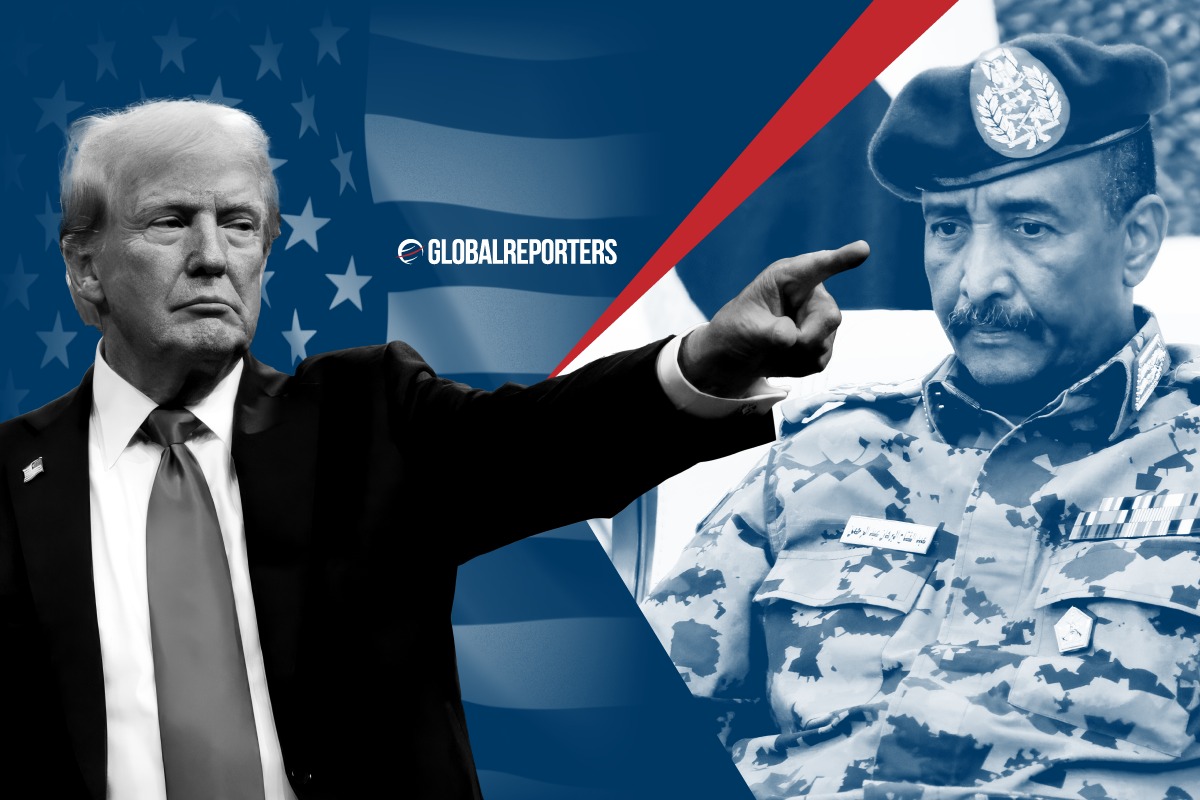
The United States has escalated its pressure on Sudan’s army-led authorities, announcing further sanctions after determining that Sudan used chemical weapons in 2024 in violation of the Chemical Weapons Convention.
The statement from the State Department’s Bureau of African Affairs places the dispute directly on the government led by Abdel Fattah al-Burhan, the head of Sudan’s Transitional Sovereignty Council and commander-in-chief of the Sudanese Armed Forces. The sanctions were announced against the Sudanese government, but politically they increase pressure on al-Burhan’s wartime leadership and the military establishment under his command.
Washington said Sudan has refused to acknowledge the use of chemical weapons, failed to take the necessary steps to address the situation, and refused to return to compliance with the Chemical Weapons Convention.
The U.S. also rejected Sudan’s internal committee as inadequate, saying it cannot replace independent verification by the Organisation for the Prohibition of Chemical Weapons. “Sudan’s internal committee is no substitute for independent OPCW verification,” the Bureau said.
The further sanctions, announced under U.S. law, mark a sharper phase in Washington’s response to the chemical weapons use. The United States said it would continue urging Sudan to fulfill its treaty obligations and take steps to return to compliance with the convention.
Sudan rejected the U.S. decision, calling the sanctions unilateral and illegal. In a statement, the Ministry of Foreign Affairs and International Cooperation said the allegations that the Sudanese Armed Forces used chemical weapons were baseless and had first appeared in media reports attributed to anonymous sources.
Khartoum said it remains fully committed to the Chemical Weapons Convention, including its obligations not to produce, possess or use chemical weapons. It also said it had been willing to cooperate with the United States through the technical and procedural steps required to verify any allegations.
Sudan argues that Washington failed to provide credible evidence and of bypassing the mechanisms set out under the Chemical Weapons Convention. The foreign ministry said the sanctions were politically motivated and called on the United States to provide the evidence it claims to possess.
The clash leaves Sudan facing new U.S. pressure at a time when al-Burhan’s army-led government is already under intense scrutiny over the conduct of the war and allegations of serious violations against civilians.