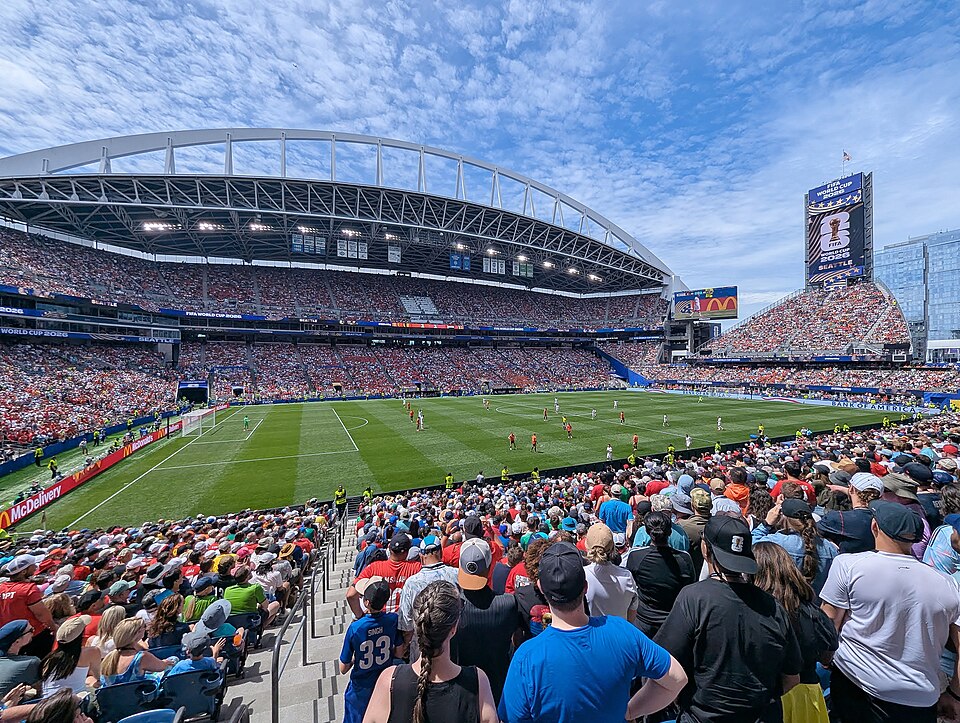
The 2026 World Cup has needed only one matchday to split the football world into new storylines: legends still raging against time, superstars grabbing the tournament by the throat, and contenders already feeling pressure.
According to ESPN’s World Cup coverage, Lionel Messi began what may be his final tournament with a hat trick for Argentina, a performance framed as proof that he is not just present in 2026, but still central to the story.
Kylian Mbappé also moved fast. ESPN reported that the France forward scored twice as Les Bleus beat Senegal in their Group I opener in New Jersey, a result described as another entry in his growing World Cup record book.
Then came Erling Haaland. On his World Cup debut for Norway, ESPN said the striker delivered the goals many expected, immediately making him the focal point of any Norwegian run.
England also landed a statement. Harry Kane and Jude Bellingham starred in a win over Croatia, while ESPN noted that Kane helped England overcome early nerves. A VAR rule change also became part of the conversation after England were awarded a penalty retake, according to ESPN’s review coverage.
Portugal’s opener was a different kind of headline. Cristiano Ronaldo, long central to Portugal’s biggest tournament moments, struggled to influence the match as Portugal drew with Congo DR, according to ESPN. The outlet also reported that Portugal’s coach defended his loyalty to the misfiring forward.
That draw has shifted attention toward Congo DR as much as Portugal. ESPN highlighted scenes of Congo DR fans celebrating in Lisbon while surrounded by Portugal supporters, a snapshot of how quickly underdog results can travel beyond the pitch.
Elsewhere, the United States has reasons to dream after what ESPN called a stunning opener, with coverage asking whether Gio Reyna’s World Cup wondergoal could be the start of something bigger for the USMNT. Christian Pulisic, however, is training solo as he races to be fit against Australia, according to ESPN.
Off the pitch, European football is still moving. UEFA says on its official site that “We reinvest 97.5% of our net revenue back into the game,” while also promoting youth competitions, women’s football growth and club-season planning in Nyon.
For now, though, the football world is watching the World Cup’s first fault lines form. The stars have shown up. The pressure has too.