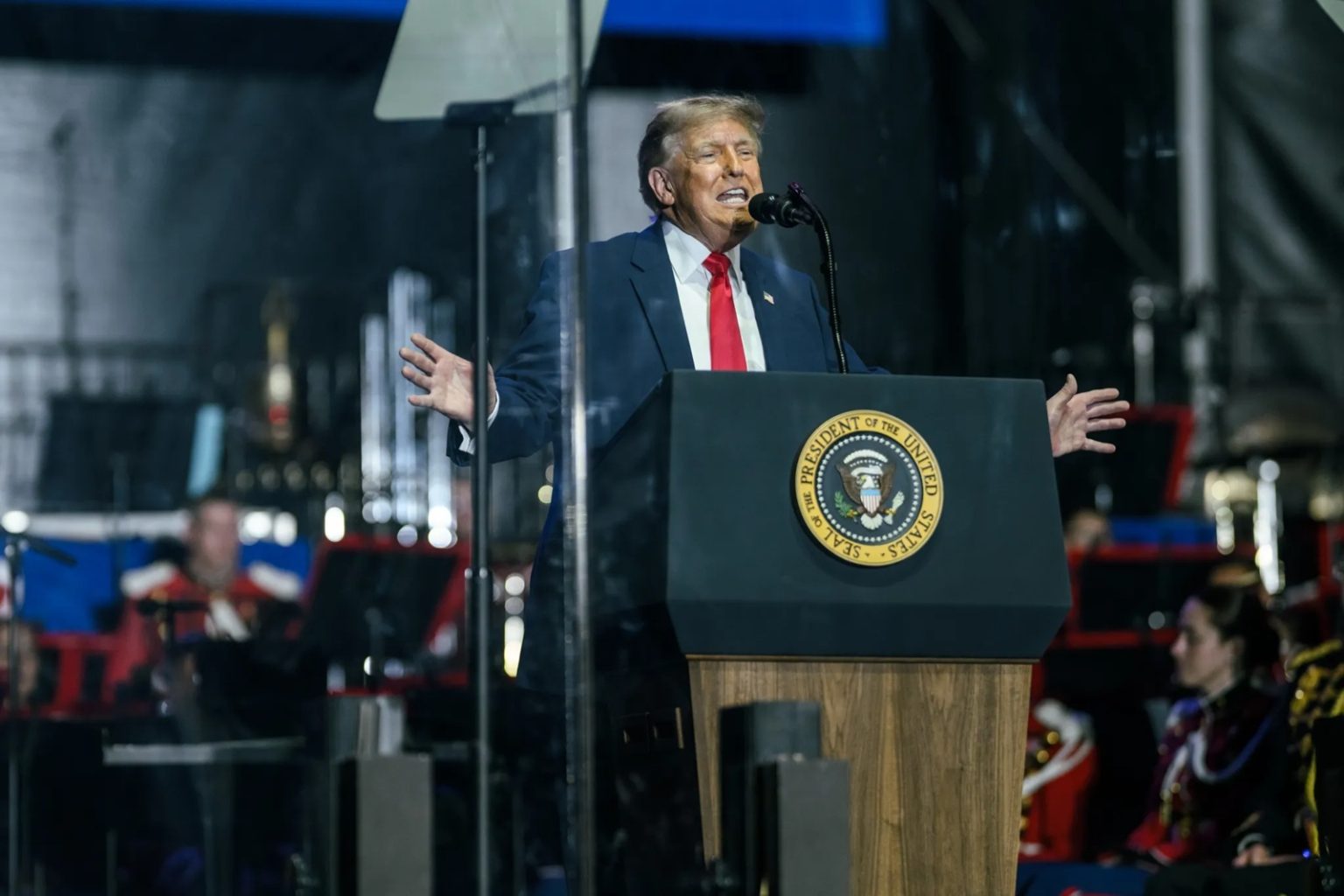
President Donald Trump said the United States would hit Iran “very hard” after accusing Tehran of breaking an interim deal meant to reopen the Strait of Hormuz and pause the war, as U.S. and Iranian forces exchanged fresh missile and drone attacks across the Gulf.
“We had a deal. It was a done deal, and then they broke it. They always break it,” Trump said Monday in a phone interview with Fox News’ “Fox & Friends.” “We’ve had 10 deals with these people, and so we’re just going to hit them very hard.”
The remarks came after Iran said over the weekend that it had again closed the Strait of Hormuz, one of the world’s most important energy shipping routes. Trump said Monday that the United States would probably take over the waterway and should be reimbursed for controlling the route.
The renewed fighting has thrown into doubt an interim U.S.-Iranian agreement signed last month that was intended to reopen the strait and halt hostilities while the two sides pursued another 60 days of negotiations. Trump has said he considers the ceasefire over, although he has left open the possibility of further talks.
Iran’s Revolutionary Guards said Monday they had targeted U.S. military facilities in Bahrain and Kuwait, destroyed radar systems in Oman and hit fuel tanks and ammunition depots at Prince Hassan Air Base in Jordan in response to U.S. strikes.
Bahrain said its air defence systems destroyed several Iranian missile and drone attacks early Monday.
The U.S. military said it had struck Iranian air defence systems, coastal radar sites, missile and drone capabilities and small boats on Sunday, using aircraft, naval vessels and drones. On Monday, Iran’s official IRNA news agency said the United States attacked military sites in southern Iran, including Qeshm, Bandar Abbas and Abadan, citing a local official.
Iran’s top negotiator, Mohammad Baqer Qalibaf, also struck a defiant tone, writing on X that “the era of one-sided deals is OVER” and warning: “We told you: keep your word or pay the price. Reality is knocking.”
The escalation has widened the conflict across the Gulf and raised new pressure on global energy markets. The Strait of Hormuz carried about one-fifth of the world’s oil supply before the war, and renewed uncertainty over the waterway has helped push oil prices higher.