Qatar confirmed on Tuesday that US and Iranian technical teams are holding talks in Doha, meeting separately with Qatari and Pakistani mediators after a weekend of strikes on commercial tankers and US military bases pushed the June 17 ceasefire framework to the edge of collapse.
The two sides arrived in Doha with sharply different accounts of what the meetings are actually for. A senior Iranian official said the focus would be exclusively on managing the Strait of Hormuz and de-escalating tensions, not on the broader nuclear and sanctions agenda that was on the table in Switzerland two weeks ago. A US official told NBC News that technical talks were continuing on all areas of the memorandum of understanding, not just the strait. Trump told reporters in the Oval Office the Doha meeting would be “perhaps important, perhaps not,” while maintaining that the US was winning militarily and repeating his condition that Iran must be prevented from developing a nuclear weapon.
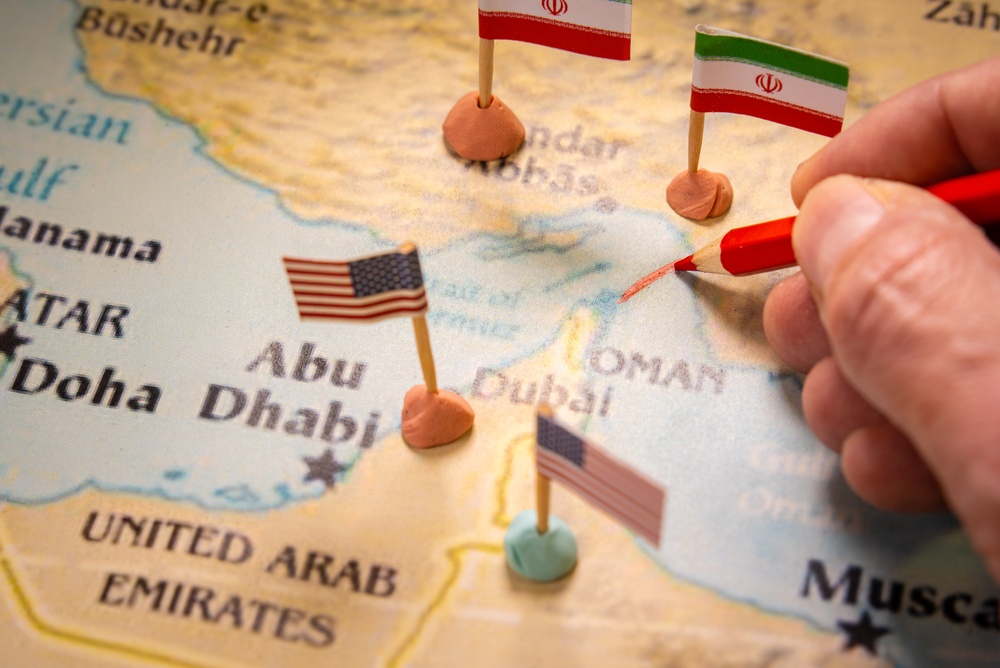
The Hormuz dispute sits at the heart of the breakdown. Iran has insisted on sole control of transit through the waterway, warning that ships which do not coordinate passage with its naval forces will be dealt with as violators. Iran’s Revolutionary Guard said it is taking measures to control traffic and that any attempt to adopt separate arrangements will complicate and delay the strait’s reopening. Under customary international law, neither Iran nor Oman can generally block passage or charge tolls, a position the US has firmly upheld.
The weekend’s military exchanges were triggered when Iran struck the Panama-flagged crude tanker Kiku with a drone on Saturday, prompting US Central Command to hit 10 Iranian military targets along the Hormuz coastline. Iran retaliated with drone and missile strikes on US bases in Kuwait and Bahrain before both sides agreed to stand down.
Iranian President Masoud Pezeshkian said on Monday that $6 billion of the $12 billion in Iranian assets frozen in Qatari bank accounts would be released as part of the interim deal, describing the memorandum as a great victory for the Iranian people.
Iran’s Deputy Foreign Minister Kazem Gharibabadi separately visited Oman on Monday to begin discussions on long-term Hormuz management, the first such meeting since the ceasefire was signed. Oil prices rose more than 1% Tuesday as traders assessed the fragility of the accord, while senior US Senate Democrat Chuck Schumer said the administration had failed to name a single concrete gain for Americans from the war.