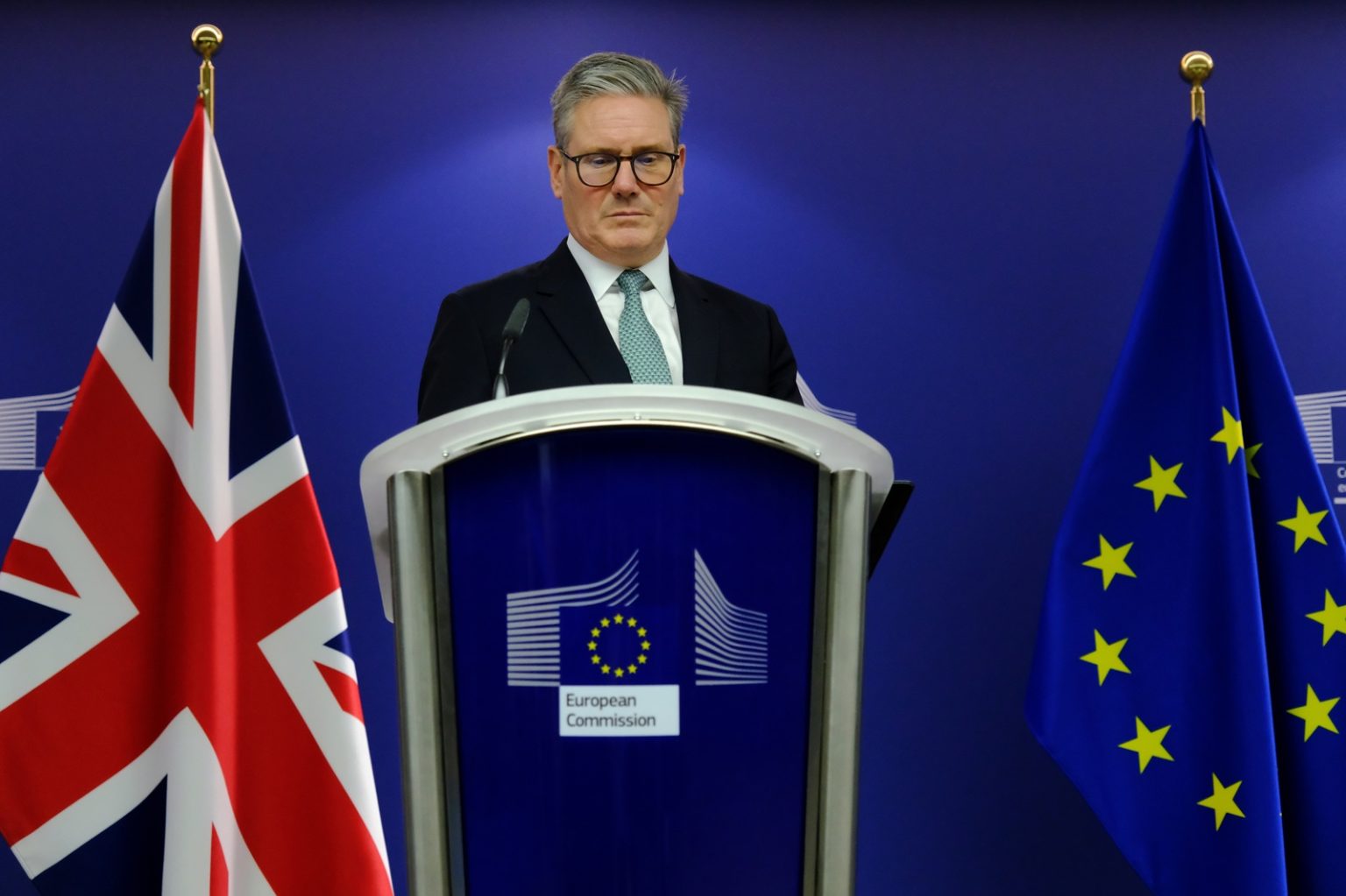
British Prime Minister Keir Starmer faced lawmakers in the House of Commons for the final time on Wednesday, declaring he was proud to leave the country in better shape than he found it, before ending his two-year premiership with a personal farewell that brought a rare standing ovation from across party lines.
At his last Prime Minister’s Questions, Starmer defended his domestic record including reduced child poverty, stronger workers’ protections and higher defence spending, while being praised by opposition leader Kemi Badenoch for galvanising international support for Ukraine. He opened by saying he was horrified at the murder of former lawmaker Ann Widdecombe, calling it chilling that three serving or former parliamentarians had been killed during his 11 years in Parliament.
Starmer has been praised for his role on the world stage, particularly for repairing Britain’s relations with its European Union neighbours after Brexit and helping rally international support for Ukraine in its fight against Russia’s full-scale invasion.
Starmer recalled how members of the British public had gathered outside Downing Street to welcome President Volodymyr Zelenskyy. He said they cheered loudly when Zelenskyy stepped out of the car and embraced him, a gesture Starmer described as a clear show of support after the Ukrainian leader’s treatment in the Oval Office.
In an uncharacteristically personal close, Starmer told his wife Victoria and two teenage children watching from the gallery that he loved them, before saying goodbye to a chamber that briefly forgot its own rules by applauding, drawing a gentle reprimand from Speaker Lindsay Hoyle.
On Friday, Andy Burnham will be formally announced as the new Labour leader. On Monday, Starmer will travel to Buckingham Palace to resign to King Charles III, after which Burnham will be invited to form a government.
French President Emmanuel Macron awarded Starmer the Legion of Honour at Tuesday’s Bastille Day celebrations in recognition of his work on European security.