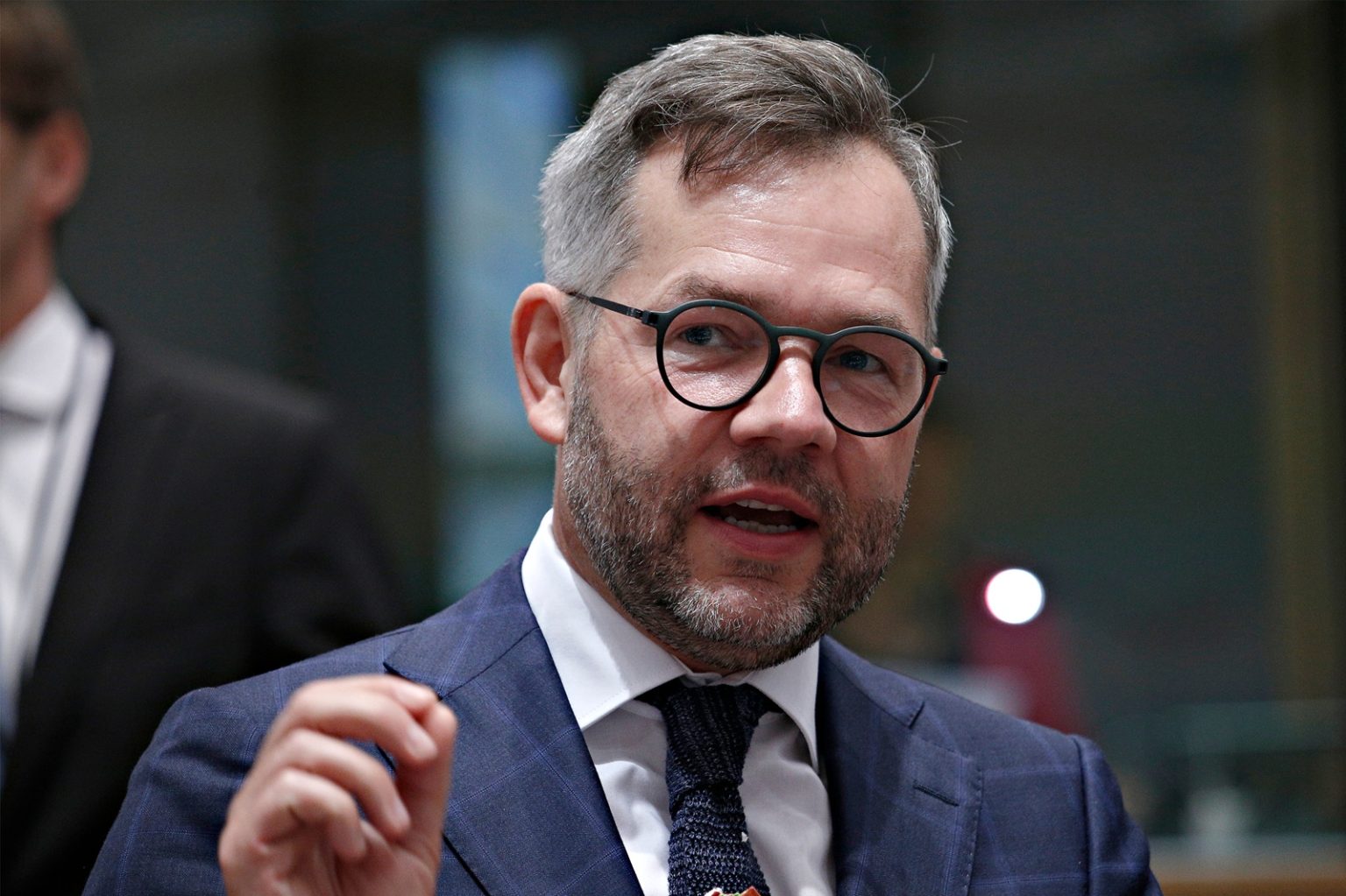
Senior German lawmaker Michael Roth has sharply criticized the emerging nuclear agreement between the United States and Saudi Arabia, calling it a strategic mistake that threatens Israel’s security and risks accelerating nuclear proliferation across the Middle East.
In a series of posts on X, Roth argued that the reported agreement represents a significant departure from the standards previously accepted by the United Arab Emirates under its landmark 2009 civilian nuclear deal with Washington.
“The nuclear agreement between Washington and Riyadh is a strategic disaster,” Roth wrote. “The UAE accepted the gold standard in 2009: civilian use only, no enrichment, full inspections. Saudi Arabia now gets a path to enrichment without giving anything in return.”
According to Roth, allowing Saudi Arabia to enrich uranium creates a dangerous precedent in a region already marked by growing geopolitical tensions.
Roth warned that permitting uranium enrichment in Saudi Arabia could trigger a wider race for similar capabilities among Gulf states.
“This is a catastrophe for Israel’s and the region’s security,” he wrote. “Enrichment is the technology that leads to a bomb, and once one Gulf state has it, others will demand the same.”
He also pointed to the apparent contradiction in Washington’s regional policy, noting that the United States and Israel have spent months confronting Iran over its uranium enrichment program while now appearing willing to grant similar capabilities to Riyadh.
Roth also argued that the reported agreement reflects a diplomatic setback for Israeli Prime Minister Benjamin Netanyahu.
“Netanyahu has spent years telling the world he is the one leader who can move Trump,” Roth said. “Yesterday we saw what that influence is worth. Nothing.”
He added that Israel appears to have lost the prospect of normalization with Saudi Arabia while instead facing the possibility of a Saudi enrichment program.
“He lost normalisation with Riyadh and got enrichment instead,” Roth wrote.
Roth concluded by criticizing Europe’s absence from the negotiations, arguing that the continent failed to play any meaningful role in shaping a decision with major implications for regional security.
“Europe was not even in the room, and that is our own failure,” he said.
His remarks come amid growing international debate over the reported U.S.-Saudi nuclear negotiations, particularly over whether Riyadh could receive the right to enrich uranium as part of a future civilian nuclear cooperation agreement.