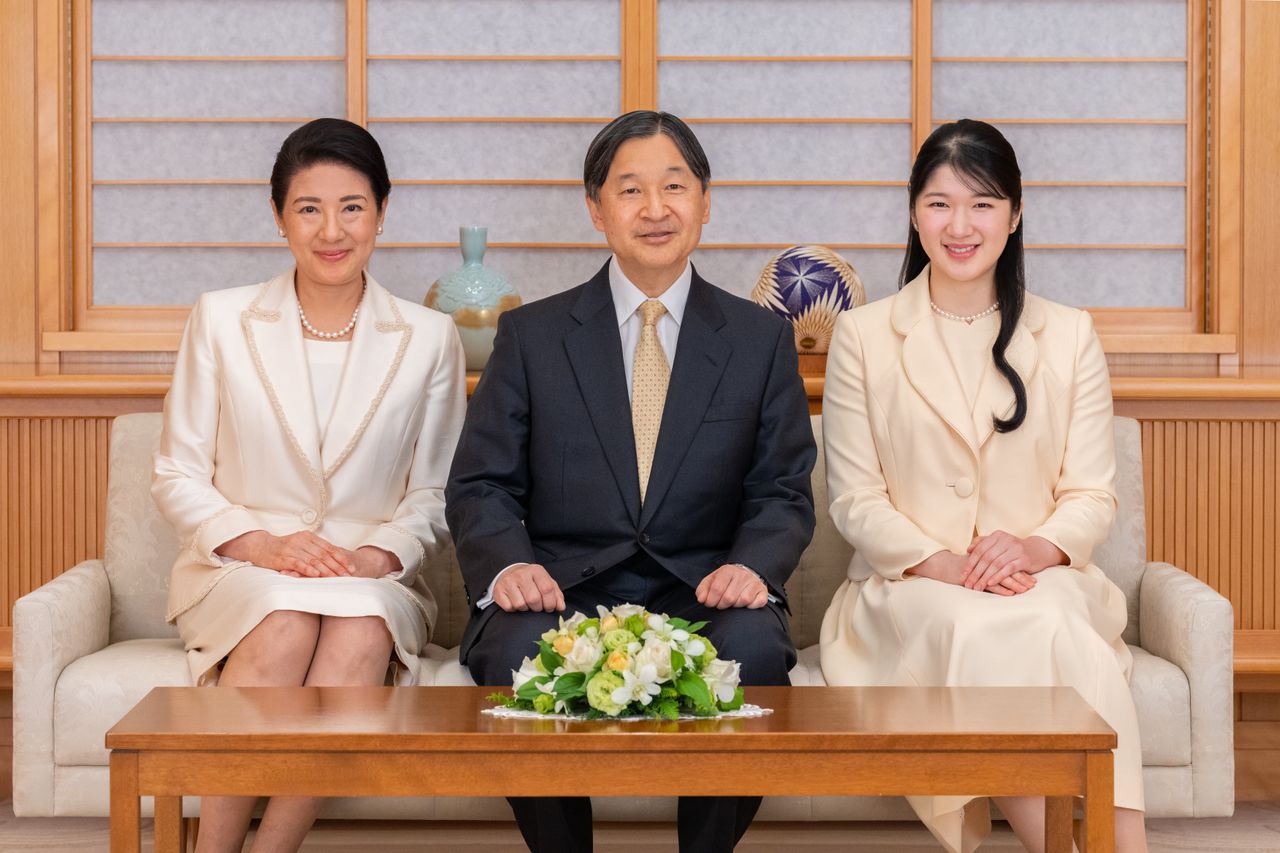
Japan’s Parliament on Friday enacted a revision to the Imperial House Law that keeps the Chrysanthemum Throne reserved for paternal-line men, shutting out Emperor Naruhito’s daughter, Princess Aiko, despite her public popularity.
The change allows distant male relatives from former imperial branches to be adopted into the royal family to father future heirs. It also lets princesses keep royal status after marrying commoners, though their spouses and children would not become royals.
The vote protects a succession line that now runs from Naruhito to his younger brother, Crown Prince Akishino, then to Akishino’s 19-year-old son, Prince Hisahito. After Hisahito, the next person in line is Naruhito’s 90-year-old uncle, Prince Hitachi.
Only five of the imperial family’s 16 adult members are men, and there are no children in the family. Hisahito was the first male royal baby born in four decades.
Prime Minister Sanae Takaichi and other conservatives have argued that the male bloodline is “the only source of the emperor’s authority and legitimacy.” The Imperial Household Agency said it would work within the new law while considering the royals themselves.
Agency chief Buichiro Kuroda said the agency “will do everything it can appropriately to support smooth activity for the Imperial Family members in line with (the revisions), while fully taking into consideration their feelings.”
Critics said the law blocks a female monarch while using distant male relatives to preserve a system many Japanese see as outdated. Hideya Kawanishi, a Nagoya University monarchy expert, called it “a declaration to prevent female monarchs.”
Japan has had eight female monarchs in its history. The last, Empress Gosakuramachi, ruled from 1762 to 1770.
For Princess Aiko, the result is immediate and personal: she remains visible, popular and outside the line of succession.