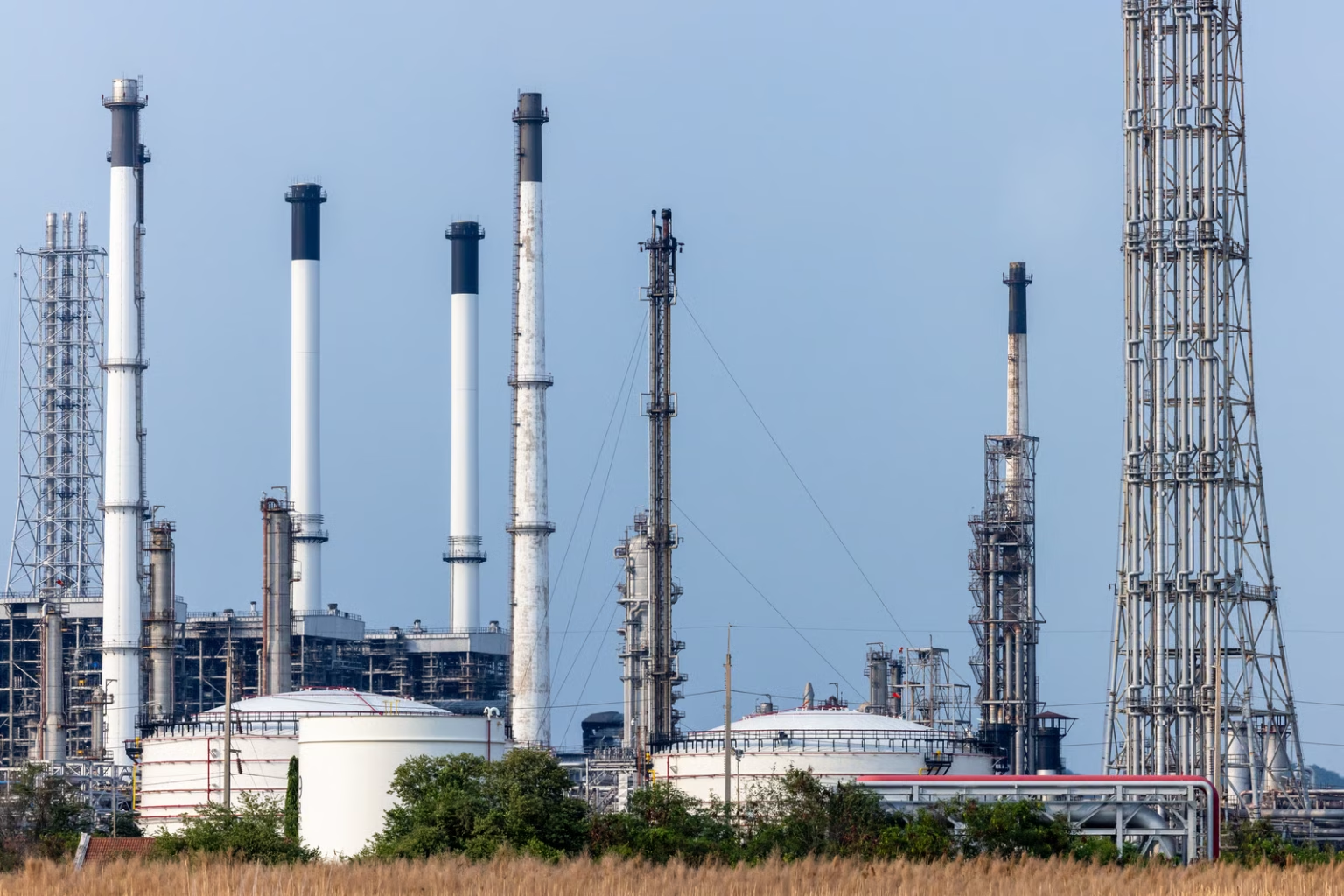
Ukrainian President Volodymyr Zelenskyy confirmed on Sunday that his forces struck two major Russian oil refineries overnight, hitting the Slavyansk facility in Russia’s Krasnodar region and a second refinery in the Yaroslavl region, in what he described as another round of “long-range sanctions” against Moscow’s war economy, timed to coincide with Ukraine’s Constitution Day.
The Slavyansk refinery, operated by Slavyansk ECO with a processing capacity of around 100,000 barrels per day, is a key fuel supplier for Russian-occupied Crimea. Krasnodar Governor Veniamin Kondratiev confirmed the strike, saying a fire broke out at the facility and that a gas pipe, power transmission lines and several private homes were damaged. One person was killed. Russian authorities said their air defences intercepted 213 drones overnight, though the confirmed damage to both sites indicates a significant number of Ukrainian munitions reached their targets. Zelenskyy separately posted video footage showing large plumes of black smoke and fire rising from the targeted sites.
The campaign is taking a measurable toll. Russian diesel production fell 10% in May, following an identical drop in April, as Ukraine has increasingly targeted hydrocracking units rather than simpler storage infrastructure. Russia has now banned both petrol exports, since April 1, and aviation fuel exports, since June 1. Russian Deputy Prime Minister Alexander Novak acknowledged “unscheduled maintenance” at refineries on June 4, and the Russian Energy Ministry followed days later by admitting that increased enemy air attacks had led to production cuts and supply disruptions, the first such official acknowledgement of the campaign’s impact.
The strikes came as Zelenskyy faces a separate and deepening crisis with Poland, Ukraine’s most vital European partner. A decision by Zelenskyy on May 26 to name an elite military commando unit “Heroes of the Ukrainian Insurgent Army” ignited fury across the Polish political spectrum. The UPA, as the group is known, is viewed in Ukraine as a symbol of resistance against Soviet occupation, but is widely associated in Poland with the mass killing of roughly 100,000 Polish civilians during World War II, a campaign the Polish parliament has defined as genocide.
Polish President Karol Nawrocki stripped Zelenskyy of Poland’s highest state honour, the Order of the White Eagle, on June 19. Ukrainian officials including the head of Zelenskyy’s office and Foreign Minister Andrii Sybiha returned their own Polish state awards in response. Zelenskyy declined to attend the Ukraine Recovery Conference in Gdansk last week, sending Prime Minister Yulia Svyrydenko instead. Polish politicians from across the political divide have since called for new conditions on Ukraine’s EU accession, a significant threat to Kyiv’s long-term strategic goals.
Polish Prime Minister Donald Tusk has urged both sides to step back, writing that a conflict between Poland and Ukraine “delights Putin and shocks our allies,” and warning that the front line lies elsewhere.